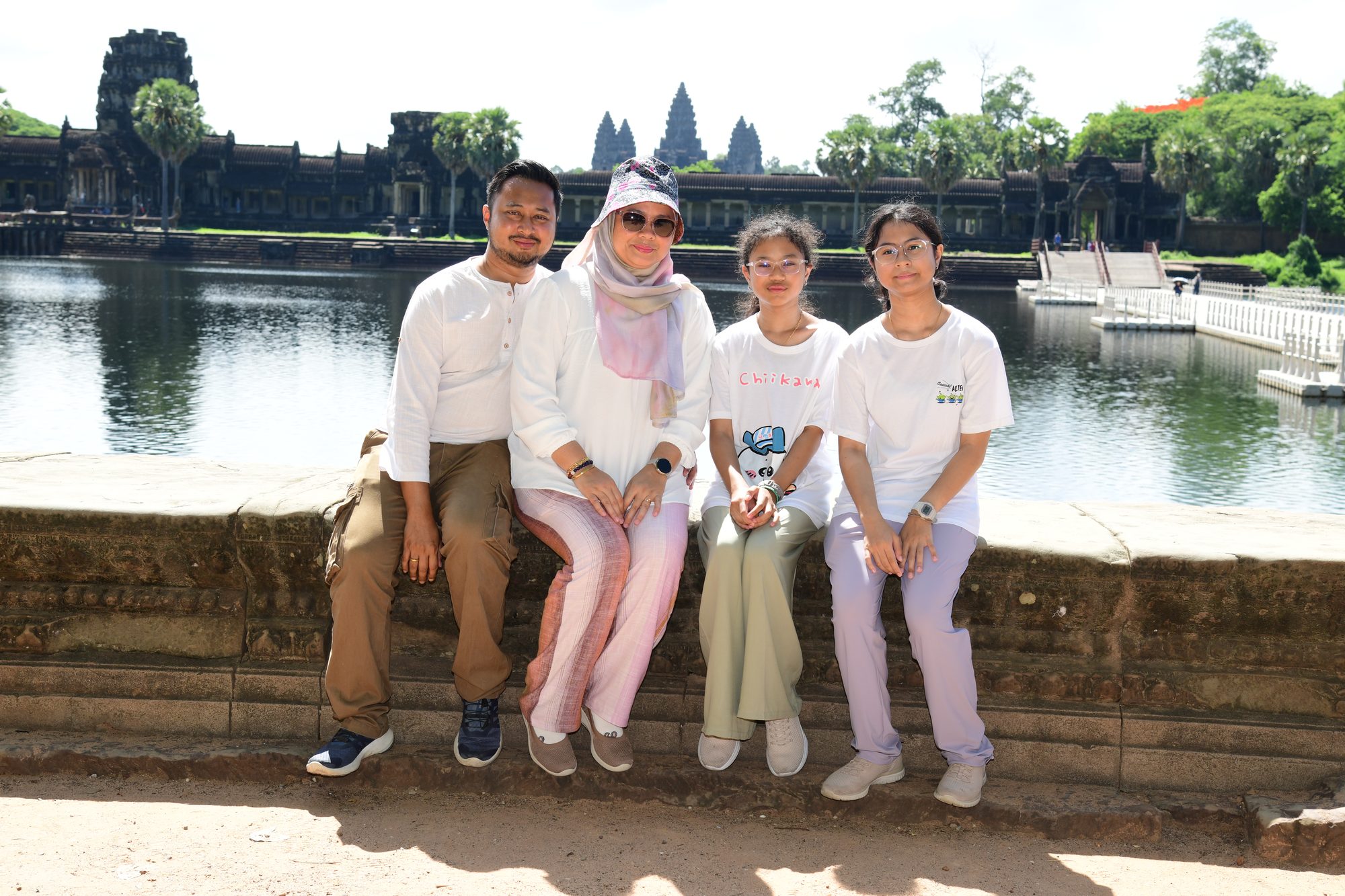
Eight days, two cities, one very hot family. At the end of May we flew to Phnom Penh, spent four days in the capital, then drove six hours north to Siem Reap for Angkor Wat. We came for two things: to understand the history of the Khmer Rouge and the Pol Pot genocide, and to see Angkor Wat. It was our first time in Cambodia with the kids, Aina (12) and Afia (11); my wife had been before. We booked a private tour with a Malay-speaking guide, which turned out to be the best decision of the whole trip.
I cut the trip into two films. The first is the whole eight days in six minutes:
The trip at a glance
- When: 29 May to 5 June 2026, 8 days and 7 nights
- Route: fly into Phnom Penh (4 nights), drive to Siem Reap (3 nights), fly home from Siem Reap
- How: private tour with a Malay-speaking guide and driver, with Nur Rahman Tour in Phnom Penh, guided by Rahman himself (email: [email protected]).
- Cost: USD 2,000 for the four of us, so USD 500 per person for 8 days and 7 nights. That covered our hotels in Phnom Penh and Siem Reap, breakfast at the hotel, lunch and dinner every day, all transport including the drive to Siem Reap, the guide, and some entrance fees (S-21 and the War Museum, for example). Phnom Penh Safari and the Phare circus weren’t in the package; we asked to add them and paid for those ourselves. Flights are separate.
- Weather: hot and humid, with the odd evening downpour. Pack hats, sunscreen and a lot of water.
Day 1: landing in Phnom Penh
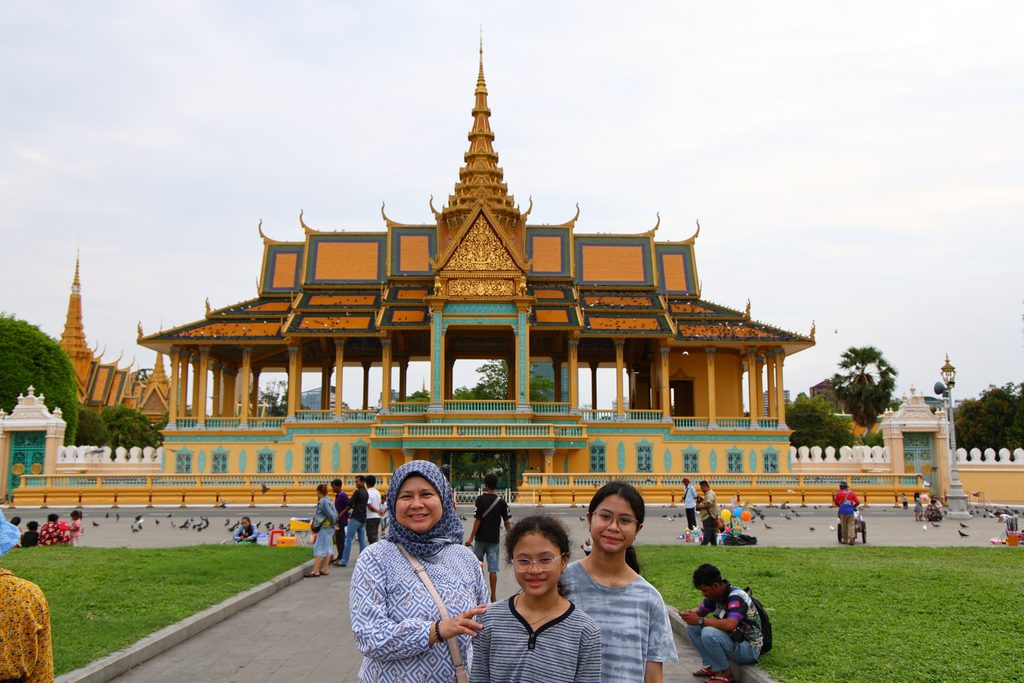
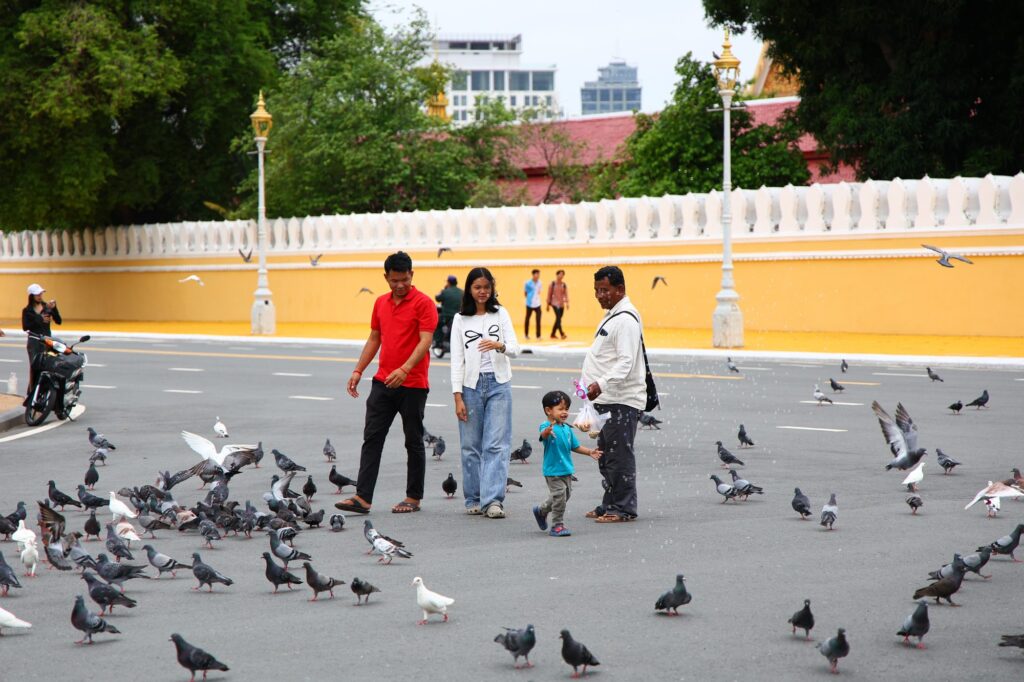
Rahman met us at Phnom Penh’s shiny new airport and went straight into a city drive. We stopped at the Royal Palace, where the kids spent more time chasing pigeons than looking at the palace, passed the Independence Monument, and ended the night with dinner by the river as the palace lit up.
Day 2: the hard history, then the river
Day two is the heavy one, and one of the main reasons we came. Tuol Sleng, better known as S-21, was a high school until the Khmer Rouge turned it into a prison in 1975. Around 17,000 people were held there before the regime fell in January 1979, and only a handful are known to have survived. Many were taken from there to Choeung Ek, the killing fields outside the city, where a memorial stupa now holds more than 8,000 skulls recovered from the mass graves.
I expected the girls to be shocked. Instead they were curious, and kept asking how it happened, why and when. You get an audio guide: walk to a numbered stop, press that number, and it tells you the story of that spot. Everything is documented in astonishing detail, from the photos to the prisoners’ records, and it’s the best history lesson they’ve had. I would definitely go again.
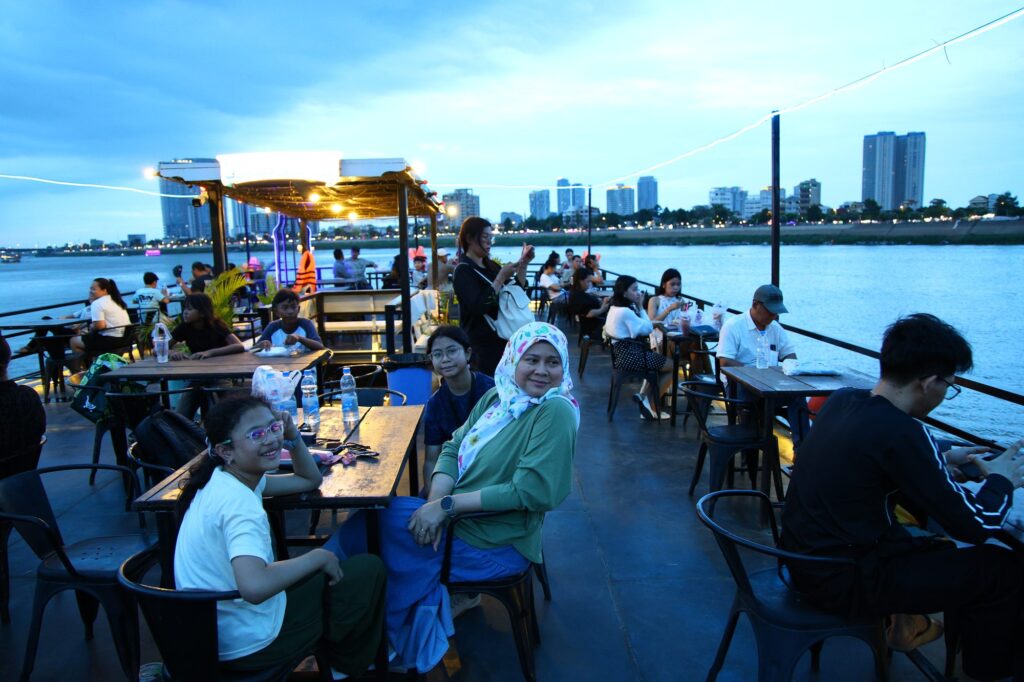
After that we needed something lighter: the markets for clothes and souvenirs, then a sunset dinner cruise on the Mekong and a walk through the night market.
Day 3: Phnom Penh Safari
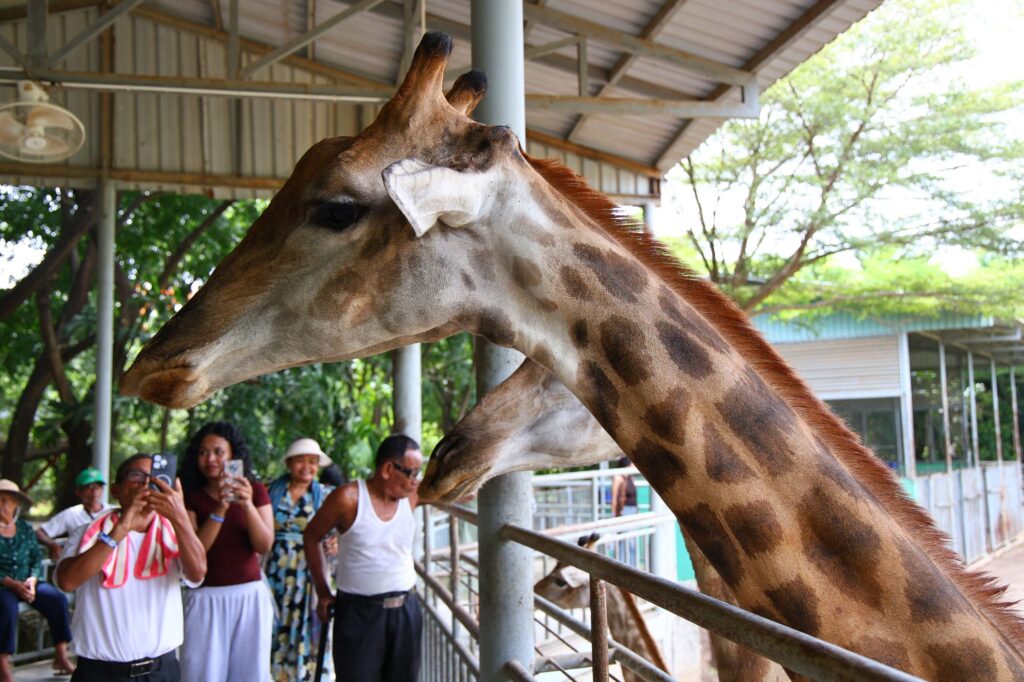
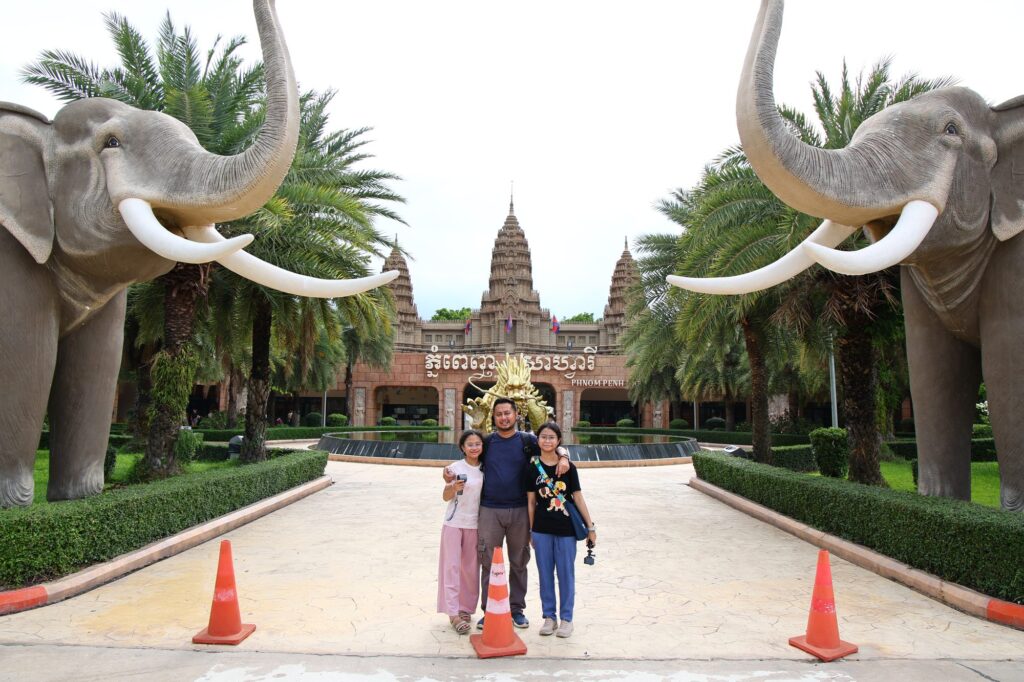
The tour plan had a Cham Muslim village and the markets for day three, but we swapped it for Phnom Penh Safari, and the kids were thrilled. Feeding the giraffes was the moment of the day. There are also tigers, bears, elephants, crocodiles, a park train and a string of animal shows.
Honestly, the Safari was one of the best days. I got to feed the tiger cubs and a full-grown tiger, we watched the bears dance, and you can even sit on a crocodile if you’re brave enough. The animals looked healthy and well looked after. If you’re in Phnom Penh, put it on your list.
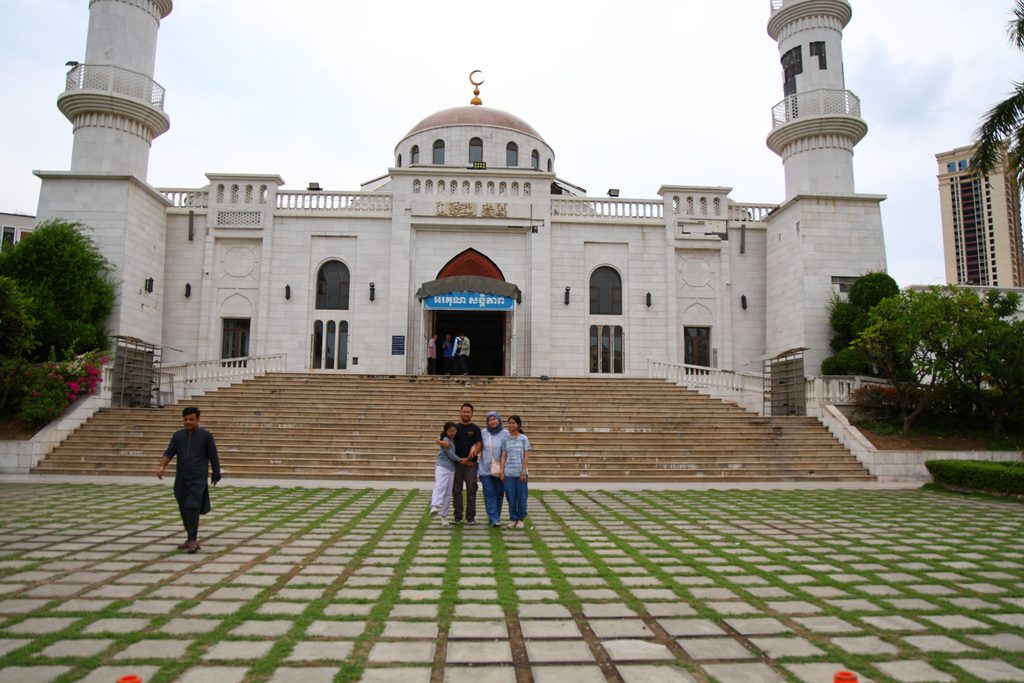
We also stopped at Al Serkal Mosque to pray. The first mosque here opened in 1968, a gift from the Al Serkal family of the UAE; today’s building, with its twin minarets and big central dome, replaced it in 2014 and is the largest mosque in Cambodia. If you’re Muslim and in Phnom Penh, it’s worth the stop.
Day 4: the road to Siem Reap
A morning at Central Market (that yellow Art Deco dome is worth seeing even if you buy nothing), then about six hours on the road to Siem Reap. The drive is better than it sounds because of the stops: fried insects by the roadside in Skuon, lotus sellers at the car window, a date farm, and kralan, sticky rice roasted inside bamboo. We got to Siem Reap in the evening and walked Pub Street in the rain.
Did we eat any? No. We’re Muslim and none of it is halal, so for us it was purely a stop to look (and take photos).
Day 5: Tonle Sap, silk and Apsara dancers
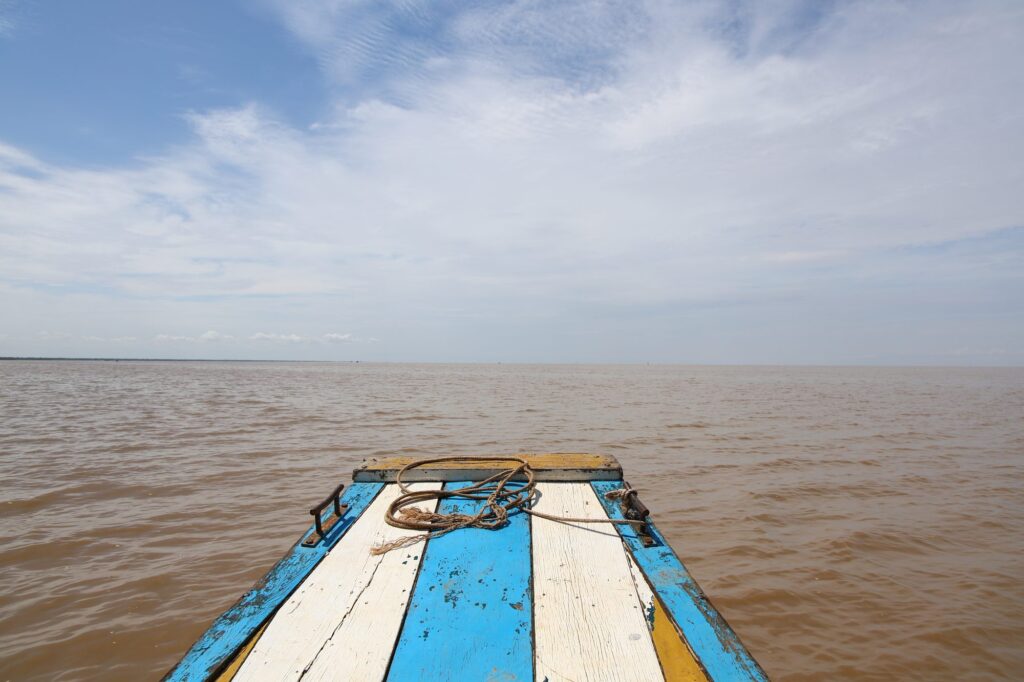
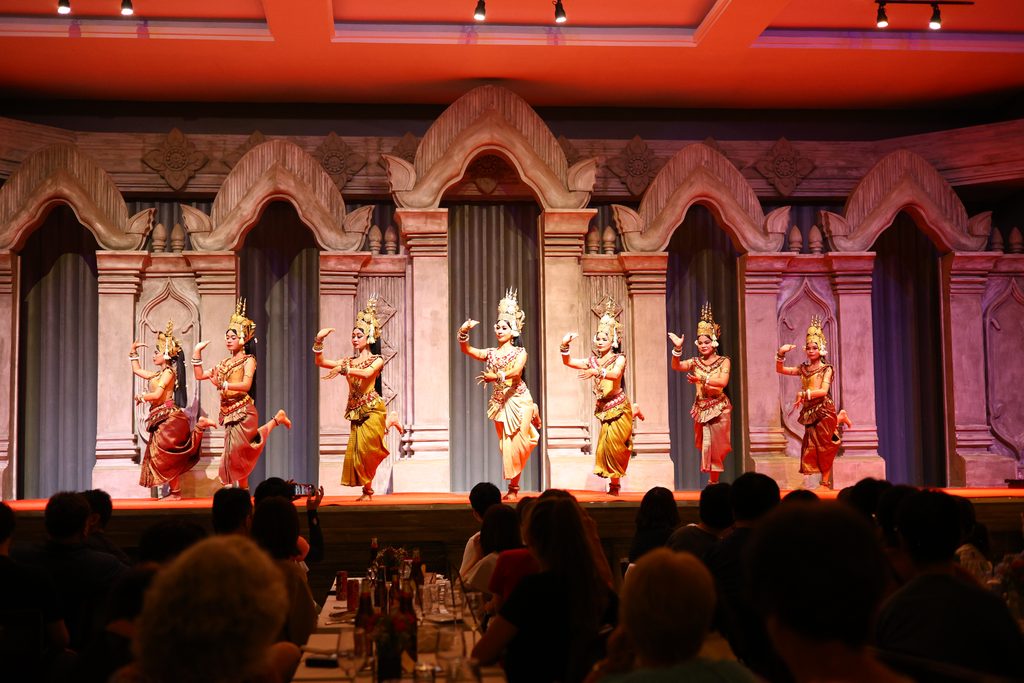
Tonle Sap is the biggest freshwater lake in Southeast Asia, and the boat ride takes you through a village of houses on stilts and out onto open water so wide it looks like the sea. We went at the end of the dry season, when the water is low. Next time I’d like to see it in the rainy season, when the lake swells and the boats ride much higher. In the afternoon we visited a silk farm (silkworms, yellow cocoons, weavers at their looms) and the Artisans Angkor workshop, then had dinner at the Smile of Angkor Apsara show.
Day 6: Angkor Wat, Bayon and Ta Prohm
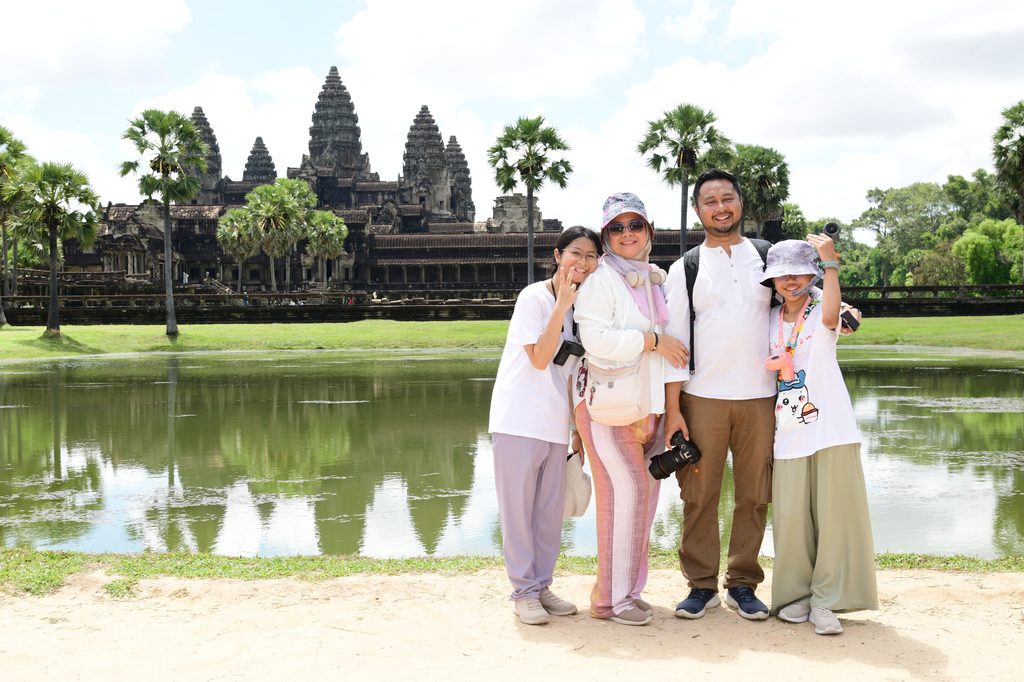
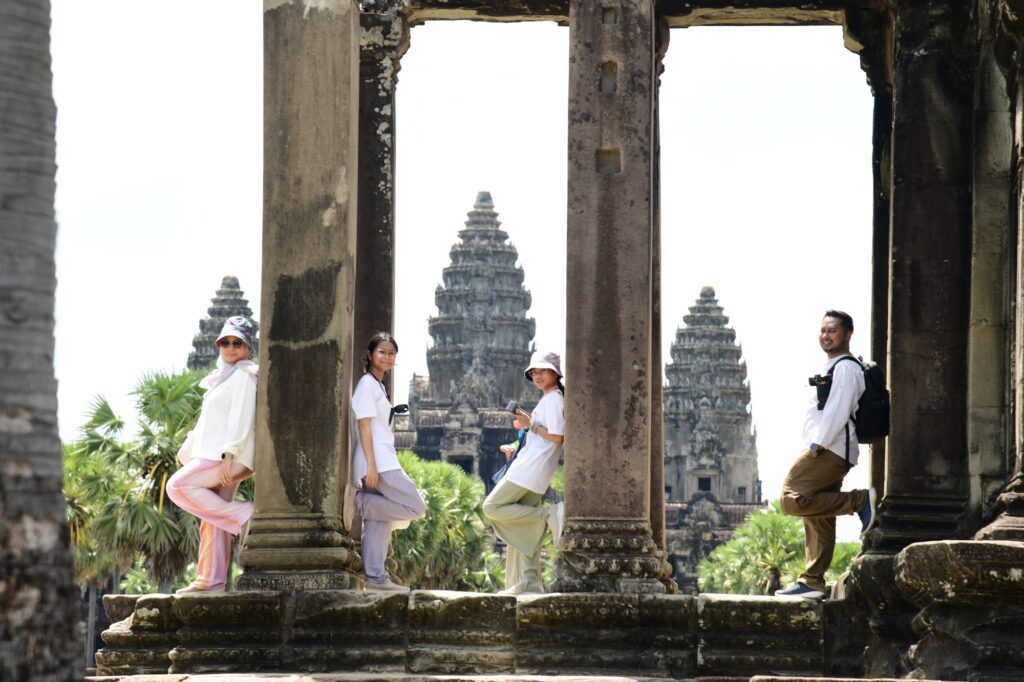
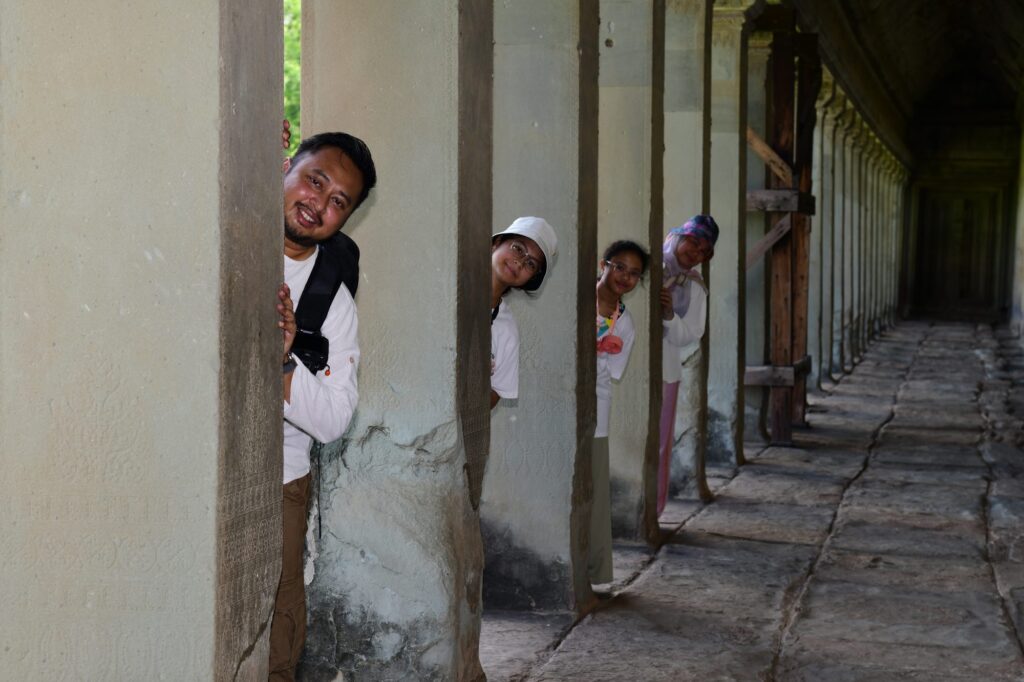
The reason everyone goes to Cambodia. We started at Angkor Wat, built in the 12th century by King Suryavarman II, crossed into Angkor Thom to see the giant stone faces of the Bayon, and finished at Ta Prohm, the jungle temple where tree roots have swallowed the walls (yes, the Tomb Raider one). We also hired a photographer for the morning at Angkor Wat, which is why, for once, I’m in the family photos.
This day got its own film, with our guide explaining the history as we walked:
That evening we watched Phare, the Cambodian circus, which is more acrobatics and storytelling than clowns: each show tells a story. It was very entertaining and I think it’s worth it. Phare’s parent charity, Phare Ponleu Selpak, holds the Guinness World Record for the longest circus show (just over 24 hours), and I like that it gives back: their school trains young Cambodians who want to become circus artists. Would I go again? Maybe, depending on which story is playing.
Day 7: flowers and a war museum
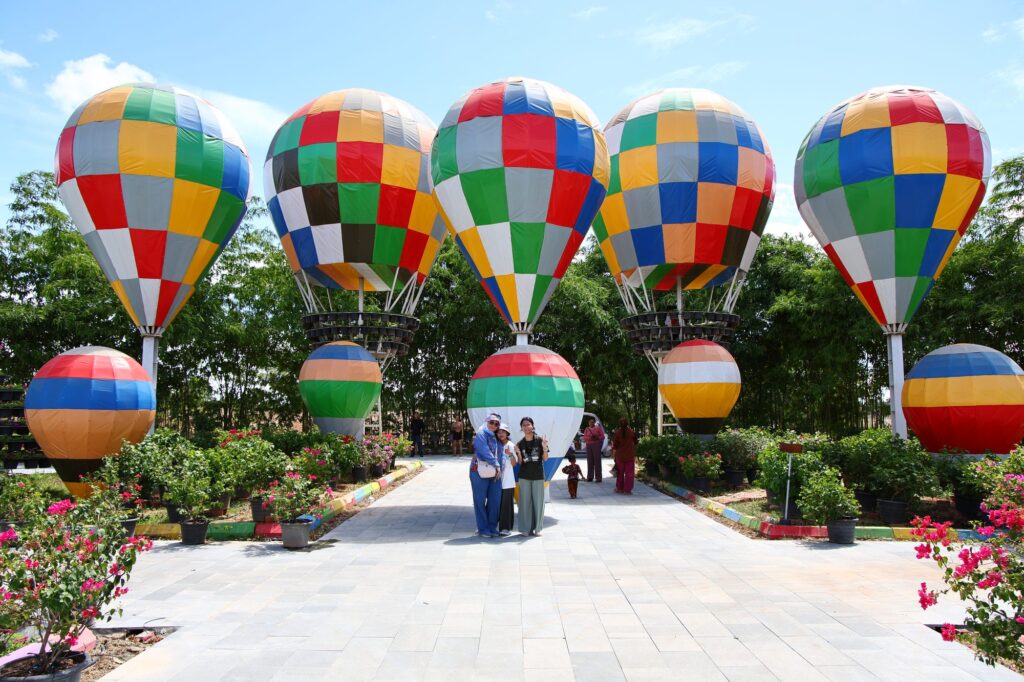
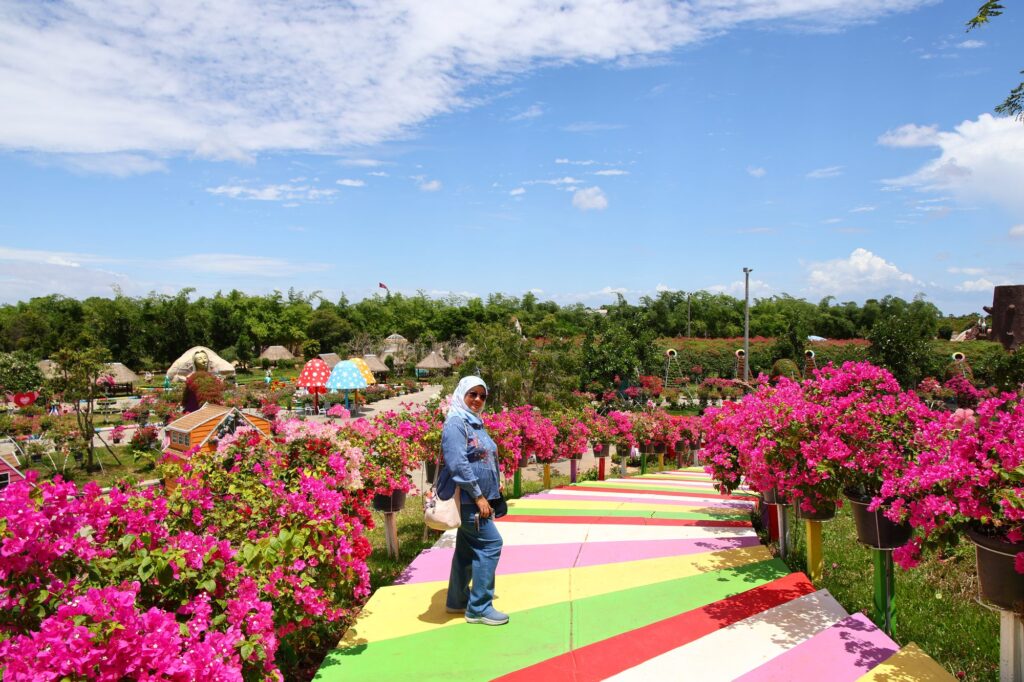
A slow day to finish. Angkor Wonder Garden is a huge flower park with rainbow paths, hot-air-balloon decorations and golf carts, which made it the easiest place of the trip for photos. In the afternoon we went to the War Museum, where the kids could get up close to old tanks and a helicopter. Honestly, I’d skip it: it’s basically a yard of old tanks, guns and ammunition, and on the day we went the only guide on hand spoke English.
Day 8 was breakfast, packing and the flight home from Siem Reap.
Tips if you’re going with family
- Visa: Malaysians don’t need a visa for a short holiday in Cambodia. Just make sure your passports have at least six months left.
- Money: US dollars are used everywhere alongside the Cambodian riel. Bring small notes; change often comes back in riel.
- Angkor pass: ours was included in the package, and Rahman sorted it at the ticket centre. If you’re going on your own, buy it at the official ticket centre before you go in. Children under 12 have traditionally got in free with their passport, but check the current prices on the official Angkor Enterprise site.
- Start early at Angkor: by late morning the heat is brutal, and the steep stairs to the top of Angkor Wat are much easier before then.
- Halal food: it isn’t easy to find in Cambodia on your own. Rahman is Muslim himself and knows exactly where to eat, so for us it was easy: we just followed him.
- A Malay-speaking guide is worth it: I’d recommend Rahman to any Malaysian family. Talking in Malay made everything easier, and he was flexible: when we wanted the Safari and the circus, he simply rearranged the days. For lunch and dinner he took us wherever we wanted, or suggested a place, and paid the bill from the package.
- Child pricing: on the agency’s price list, children under 10 pay 60–80% of the adult price (depending on whether they need an extra bed), and infants under 3 are free. Ours were 11 and 12, so they paid the adult price.
My honest verdict
Worth it, for the history and for Angkor Wat. Angkor is magnificent: a temple city the jungle swallowed for centuries, and the architecture, and the way it was built alongside all the other temples around it, is a sight to see. I’d skip the War Museum, and I’d go back to Tonle Sap in the rainy season.
Who is it for? Families, ideally with kids who can handle a lot of walking in the heat, because there’s plenty of it. Younger children can do it too; just plan shorter days.
Not sponsored: we paid for this trip ourselves at the normal price. We booked with Nur Rahman Tour in advance, got no discount, and nobody asked me to recommend them.
The original tour itinerary
This is the itinerary the tour agency sent before the trip, translated from Malay. We moved a few days around on the ground, so it doesn’t match the diary above exactly, but it’s a useful starting point if you’re planning your own. B, L and D mean breakfast, lunch and dinner are included.
Show the full 8-day itinerary
- Day 1, 29 May (D): Arrive at Phnom Penh airport and meet your guide. Photo stops at the Independence Monument, the Royal Palace and Diamond Island. Dinner, then check in to the hotel in Phnom Penh.
- Day 2, 30 May (B/L/D): Tuol Sleng Genocide Museum (S-21), the Pol Pot regime’s prison. The Killing Fields, where many thousands of people were tortured and killed by the Pol Pot regime. Shopping at the Russian Market for souvenirs, antiques and locally made clothing. Mekong River cruise. Lunch and dinner, free time, overnight in Phnom Penh.
- Day 3, 31 May (B/L/D): The Cham Malay village, the Muslim market and Muslim quarter, and Al Serkal Mosque, the largest mosque in Cambodia. Shopping at Central Market and Orussey Market. Lunch and dinner, free time, overnight in Phnom Penh.
- Day 4, 1 June (B/L/D): Drive to Siem Reap (about 6 hours). Stops at Skuon for fried crickets, frogs, spiders and fruit; at Stoung to see traditional flattened rice (emping) being made; at a date farm; and at Dam Daek for Cambodian bamboo sticky rice (lemang). Boat ride on Tonle Sap, the largest lake in the country, through a floating village of thousands of houses where locals farm crocodiles and fish. Lunch and dinner, check in to the hotel.
- Day 5, 2 June (B/L/D): Angkor Wat. Angkor Thom and the Bayon. The Terrace of the Elephants, the Terrace of the Leper King and the Royal Enclosure. Ta Prohm (the Tomb Raider temple). Baphuon temple. Preah Dak village, to see sweets being made from palm sugar and coconut. Lunch and dinner, free time.
- Day 6, 3 June (B/L/D): Angkor Wonder Garden, the biggest flower garden in Cambodia. Shopping at the Old Market, the Siem Reap Art Centre and the night market. Lunch and dinner, free time.
- Day 7, 4 June (B/L/D): Artisans Angkor stone-carving workshop, showing how Angkor Wat’s carvings were made by hand. A silk farm, to see the whole process from silkworm to cloth. The War Museum. Lunch and dinner, free time.
- Day 8, 5 June (B): Breakfast and free time until hotel check-out, then transfer to Siem Reap airport for the flight home.